
Brand Mascot Design: How to Create a Character for Your Brand
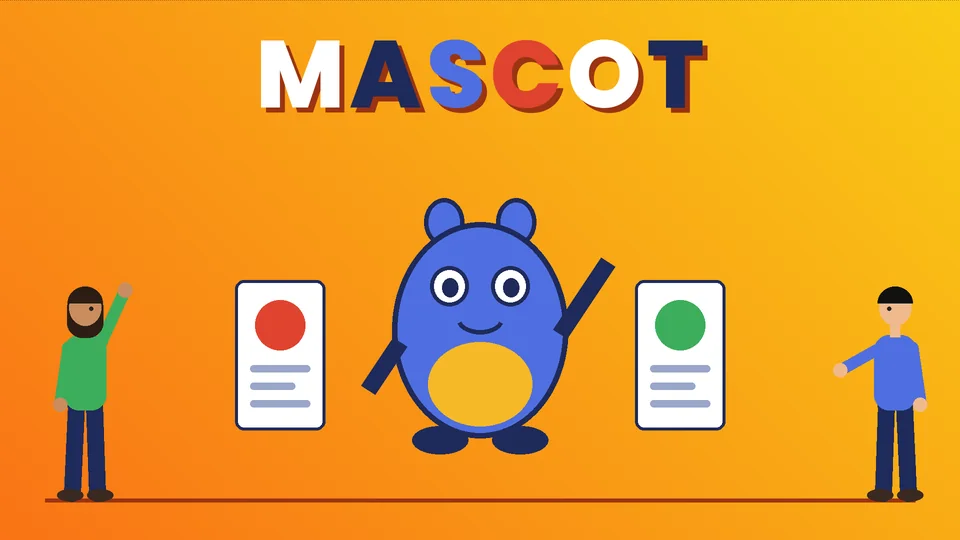
How do you design a brand mascot?
Design a brand mascot by starting with your brand personality and audience, then sketching a simple character, often an animal, person or object, that expresses that personality. Give it a limited color palette taken from your brand, a shape that reads clearly at small sizes and a small set of poses and expressions. Finally, document how it may be used in your brand style guide and consider protecting it as a trademark.
This guide explains what a brand mascot is, when one makes sense, the design process step by step, how to keep a mascot consistent and how trademark and copyright apply. Pros Inc designs logos, characters and brand identities for small businesses from our office in San Diego. Trademark and copyright basics come from the USPTO and the U.S. Copyright Office, read as of October 2026.
What is a brand mascot?
A brand mascot is a character that represents a business. It can be a cartoon animal, a person, a friendly version of a product, or an invented creature. Unlike a logo, which is usually a fixed mark, a mascot can move, change expressions and appear in different scenes.
Mascots and logos often work together. Some businesses use the mascot inside the logo, while others keep the logo simple and use the mascot in marketing, packaging and social media.
When does a mascot make sense?
A mascot is not right for every business. It tends to work well when:
- your audience includes families, children or casual buyers;
- your product is hard to show, such as software, insurance or a service;
- you want a friendly face for social media, packaging or events;
- your market is crowded and you need a memorable way to stand out.
A mascot may be a poor fit when your brand depends on a serious, formal or luxury tone, or when you do not have the budget to use it consistently. A character that appears once and then disappears does little for recognition.
Step 1: Define the personality
Start with words, not drawings. Write down three to five personality traits for your brand, such as helpful, energetic, calm or clever. Then answer:
- Who is the main audience?
- Where will the mascot appear most: packaging, website, social media, signs or vehicles?
- Should it feel playful, trustworthy, quirky or bold?
These answers guide every design choice that follows.
Step 2: Choose the character type
Common options include:
| Type | Works well when | Watch out for |
|---|---|---|
| Animal | You want warmth and broad appeal | Overused animals in your industry |
| Person | You want a human, service-focused feel | Stereotypes and dated styles |
| Product character | Your product has a clear, simple shape | Shapes that are hard to animate |
| Invented creature | You want something no one else has | Characters that are too abstract to relate to |
Look at what competitors use. If every business in your field has a smiling owl, a different choice will be more memorable.
Step 3: Sketch simple shapes
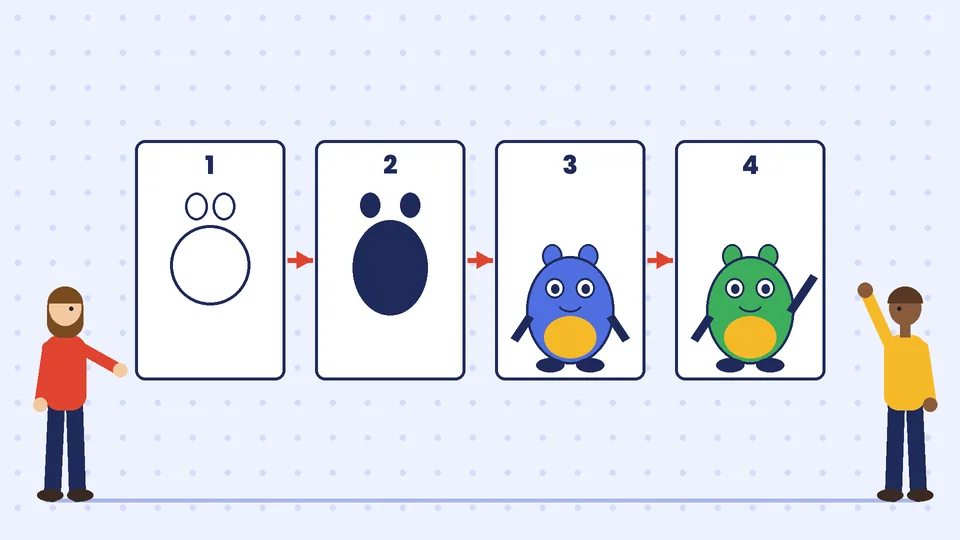
Begin with rough sketches built from basic shapes: circles, ovals and rounded rectangles. Simple shapes make a mascot easier to recognize, draw again and animate. Test each sketch as a black silhouette. If you can still tell what the character is, the shape is strong.
Exaggerate one or two features, such as big eyes, a distinctive hat or an unusual tail, so the mascot is easy to remember.
Step 4: Apply your brand colors
Use colors from your existing brand color palette, usually two or three main colors plus a neutral. Limiting colors keeps the mascot consistent with your logo and makes printing on packaging, signs and merchandise more affordable.
Step 5: Create poses and expressions
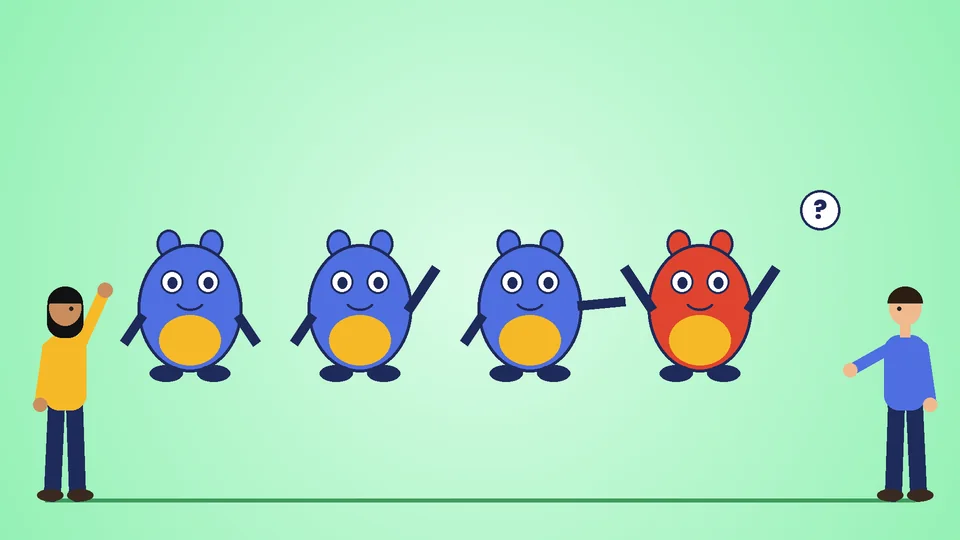
A mascot becomes useful when it can react. Create a small starter set, for example:
- a neutral standing pose for general use;
- a waving or welcoming pose for home pages and greetings;
- a pointing pose to draw attention to offers;
- a thinking or puzzled pose for help pages and error messages;
- a celebrating pose for thank-you pages and announcements.
Draw each pose from the same model sheet so proportions stay consistent.
Step 6: Test at different sizes
Your mascot may appear as a large illustration on a vehicle wrap or as a tiny social media profile image. Check that it reads clearly at both extremes. You may need a simplified version, with fewer details and thicker lines, for small sizes.
Keeping your mascot consistent
Consistency builds recognition. Add a mascot section to your brand style guide that covers:
- the approved poses and expressions;
- exact colors and line weights;
- minimum sizes and clear space;
- what not to do, such as stretching, recoloring or changing the outfit without approval;
- the file formats available, from vector masters to web images, as described in our guide to logo file formats.
Store the vector master files in one place and give designers, printers and social media managers access to the approved versions only.
Trademark and copyright basics for mascots
This section is general information, not legal advice. Talk to a qualified trademark professional about your situation.
According to the USPTO’s explanation of trademarks, a trademark can be any word, phrase, symbol or design, or a combination of these, that identifies your goods or services. A mascot used to identify your business can fall into that category. The USPTO notes that you are not required to register a trademark, but a registered trademark gives broader rights than an unregistered one. You can use TM or SM with a mark before registering, and the ® symbol only after federal registration.
Copyright is separate. The U.S. Copyright Office explains that copyright protects original works of authorship, including pictorial and graphic works, as soon as they are fixed in a tangible form. Registration is not mandatory, but the Copyright Office describes it as the most important step to strengthen protection.
If an outside designer creates your mascot, make sure your agreement clearly transfers ownership of the artwork to your business.
Frequently asked questions
What is the difference between a mascot and a logo?
Does every business need a mascot?
How many poses should a mascot have?
Can I trademark my brand mascot?
Who owns a mascot designed by a freelancer?
Should a mascot use the same colors as my logo?
Get a mascot designed for your brand
A well-designed mascot gives your business a friendly face people remember. If you are considering a mascot, a logo refresh or a full brand identity, contact Pros Inc at 715 J St #200, San Diego, CA 92101, or call (858) 652-8920.