
History of the UPC Bar Code
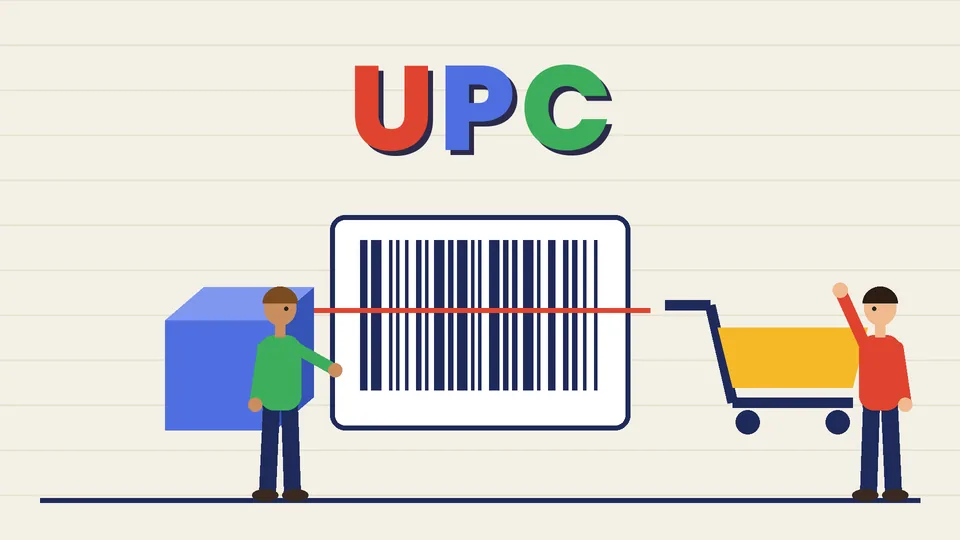
The history of the UPC bar code
The UPC (Universal Product Code) bar code was chosen by the US grocery industry in 1973 to speed up checkout and track inventory. The first UPC-marked product, a 10-pack of Wrigley’s Juicy Fruit gum, was scanned at a Marsh Supermarket in Troy, Ohio, on June 26, 1974. The organization that administered the code is known today as GS1 US.
Pros Inc designs retail packaging, and every retail package we design carries a barcode. Knowing where the UPC came from helps explain why its rules are so strict today.
A timeline of the UPC
| Date | Milestone |
|---|---|
| Early 1970s | US grocery industry leaders form an Ad Hoc Committee to agree on a single product code and symbol that any manufacturer and equipment maker could use. |
| April 3, 1973 | The committee selects the linear barcode as the UPC symbol, a date GS1 marks as the birth of the barcode. |
| June 26, 1974 | At 8:01 a.m., a 10-pack of Wrigley’s Juicy Fruit gum becomes the first UPC-marked item scanned at checkout, at a Marsh Supermarket in Troy, Ohio. |
| 1974 | The Uniform Product Code Council (later the Uniform Code Council, UCC) becomes the administrator of the UPC. |
| 1977 | The EAN system, compatible with the UPC, is created for use outside North America. |
| 2005 | The UCC and EAN merge into one international organization, GS1; the US member organization is GS1 US. |
| 2024 | GS1 US marks 50 years since the first scan. |
Sources: GS1’s 50 years of GS1 history and the GS1 US 50-year barcode “Scanniversary” release.
Why the grocery industry wanted a standard code
Before the UPC, prices were stamped on items and keyed in by hand at the register. That was slow and error-prone, and stores had little accurate data on what sold. A single open standard let any manufacturer print the same kind of code and any equipment maker build scanners to read it. Checkout got faster, pricing errors fell and retailers gained item-level sales data, which changed inventory, ordering and promotions.
How a UPC works today
A UPC-A barcode encodes a 12-digit number, a GTIN-12 in GS1 terms. The number combines a company prefix licensed from GS1 US, a product reference chosen by the brand owner and a check digit that lets the scanner catch misreads. Each unique product, including each size and variant, needs its own number.
The barcode itself carries no price. The register looks up the price and description from the retailer’s database, which is why accurate product data matters as much as the printed symbol. For practical steps, see our bar code guide.
What comes next: 2D barcodes
GS1 US is leading an industry move toward 2D barcodes, such as QR codes carrying GS1 data, which can hold far more information than a linear UPC, including links to product details. As of October 2026, its Sunrise 2027 initiative aims for retail point-of-sale systems to read GS1 2D barcodes as well as traditional UPCs by the end of 2027, with products carrying both codes during the transition. For packaging, that means planning space and artwork for both codes during the transition.
Bar codes and package design
A barcode that won’t scan causes chargebacks, delays and relabeling costs. Size, quiet zones, color contrast and placement all affect scanning. We build those requirements into every packaging design process from the first dieline, and the terms are explained in our package design glossary.
Frequently asked questions
When was the first UPC bar code scanned?
Who manages UPC bar codes in the United States?
What does a UPC number contain?
Does a barcode contain the price?
Planning new packaging?
Pros Inc, 715 J St #200, San Diego, CA 92101. Call +1-858-652-8920 to plan packaging that looks great and scans correctly.