
Sales Funnel Stages Explained: A Guide for Small Businesses
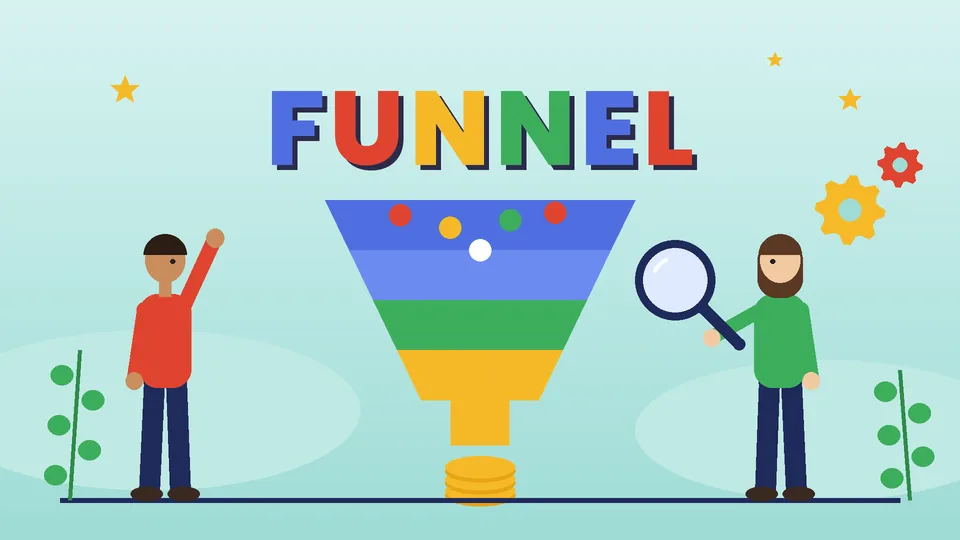
What a sales funnel is
A sales funnel is the path a prospect follows from first hearing about your business to buying from you, shown as a set of stages that narrow as people drop out. Most models use four stages: awareness, interest, consideration (or evaluation), and purchase, with retention and referral after the sale.
The funnel shape is a simplification. Real buyers skip steps, loop back, and compare you with competitors several times before they decide. The model is still useful because it forces one practical question at each stage: what does this person need from us right now to take the next step? Answer that well and fewer good leads leak out between stages.
This guide explains each stage as of October 2026, the content and offers that fit it, the numbers worth tracking, and the most common leaks we see when we review small business marketing at Pros Inc. If you want the bigger picture of channels first, start with our guide to online marketing services for small businesses.
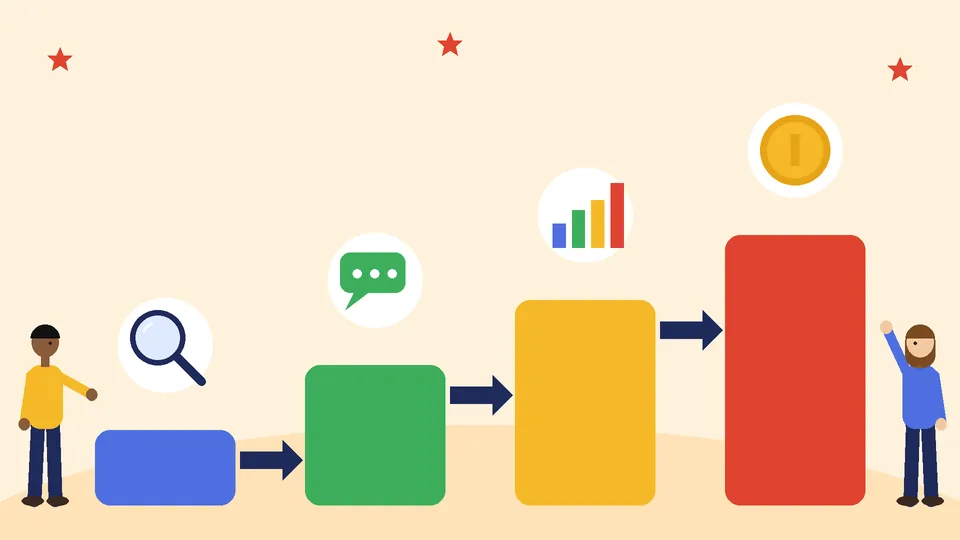
The four sales funnel stages at a glance
Each stage has a different job, a different kind of content, and a different number to watch. The table below is the version we use when planning a campaign.
| Stage | What the prospect is thinking | Content and offers that fit | Number to watch |
|---|---|---|---|
| Awareness (top) | “I have a problem. Who can help?” | Search-friendly articles, social posts, short videos, local listings | Reach, new visitors, branded searches |
| Interest | “This business seems to get my problem.” | Guides, checklists, email sign-up, webinars | Email sign-ups, return visits |
| Consideration (middle) | “Are they better than the alternatives?” | Case examples you can verify, comparisons, pricing pages, demos, FAQs | Demo or quote requests, pricing-page visits |
| Purchase (bottom) | “Is it safe to say yes today?” | Clear offer, proposal, guarantee terms, easy checkout or booking | Conversion rate, average order value |
After the purchase, a fifth stage matters just as much: retention and referral. A customer who buys again or recommends you costs far less to win than a new lead, so the funnel should not stop at the invoice.
Stage 1: Awareness
At the top of the funnel, people are not looking for you. They are looking for an answer to a problem, often on Google, social media, or a marketplace. Your job is to be findable and useful at the moment they search.
What works at this stage:
- Helpful, specific content. Articles that answer real questions in plain language. Google’s SEO starter guide recommends content that is “helpful, reliable, people-first”, and that applies to every funnel stage, not just this one.
- A complete local listing. For service businesses, a complete Google Business Profile with accurate hours, categories, and photos helps people nearby find you. Google’s tips to improve local ranking list relevance, distance, and prominence as the main factors.
- Social posts that teach. One clear idea per post, with a reason to visit your site.
- Paid reach, used carefully. Ads can speed up awareness, but they rarely fix a weak offer further down the funnel.
The most common leak here is content that attracts the wrong audience. A popular article that brings in readers who will never buy inflates traffic and hides the real problem. Check that awareness content links naturally to a next step for the right reader.
Stage 2: Interest
Interest starts when a visitor recognizes that you understand their problem. They read a second page, come back a week later, or follow you on social media. The goal now is permission: a way to keep the conversation going.
Good interest-stage offers:
- A practical download. A checklist, template, or short guide that solves one small part of the problem.
- An email newsletter with a clear promise. Say what subscribers get and how often.
- A short webinar or workshop. Useful for higher-priced services where trust takes time.
If you collect emails, follow the rules. In the US, the FTC’s CAN-SPAM Act compliance guide requires accurate sender information, honest subject lines, a valid postal address, and an opt-out that you honor within 10 business days. Building trust at this stage includes respecting the inbox.
Good copy matters here too. A clear headline and a specific promise usually outperform clever wording; our copywriting services overview explains how we approach that.
Stage 3: Consideration
In the consideration stage, the prospect is comparing options. They want proof, specifics, and a reason to choose you over a competitor or over doing nothing. This is where many small businesses lose good leads, because their site says too little about how the work is actually done.
Content that helps buyers decide:
- Clear service pages that say who you help, what is included, and what happens first.
- Verifiable examples. Real projects with permission from the client, described honestly. Never invent results or testimonials; the FTC’s guidance on endorsements, influencers, and reviews explains that fake or misleading reviews and endorsements break the law.
- Comparison content. An honest “us vs. doing it in-house” or “agency vs. freelancer” page. Our article on the benefits of hiring an internet marketing firm covers that trade-off.
- Pricing signals. Even if every project is custom, a starting range or a list of cost drivers reduces friction.
- Answers to objections. A FAQ that covers timelines, contracts, and what happens if results fall short.
Sales conversations belong here as well. A short discovery call that diagnoses the problem, rather than a pitch, often moves a lead further than another email sequence.
Stage 4: Purchase
At the bottom of the funnel, the buyer has mostly decided. Your job is to remove the last bit of risk and make the yes easy. Small details matter more here than anywhere else.
A purchase-stage checklist:
- One clear call to action. “Book a call”, “Request a proposal”, or “Buy now”, not three competing buttons.
- A short, readable proposal or checkout. Ask only for what you need.
- Clear terms. Payment schedule, what is included, and how changes are handled.
- Fast follow-up. Reply to quote requests the same business day when you can. Slow responses quietly lose buyers who were ready.
- A confirmation that sets expectations. Tell the customer exactly what happens next.
After the sale: retention and referral
A funnel that ends at the purchase leaves money on the table. Customers who had a good experience are the easiest people to sell to again and the most credible source of new leads.
Practical retention steps:
- Onboard well. A simple welcome email or kickoff call that confirms goals and next steps.
- Check in after delivery. Ask what worked and what didn’t, then act on it.
- Make referrals easy. Ask satisfied customers for an introduction or an honest review. If you offer a reward for referrals or reviews, disclose it, because the FTC’s endorsement rules cover incentivized reviews too.
- Keep useful contact. A low-frequency newsletter with genuinely helpful content keeps you in mind for the next project.
If partners or affiliates send you customers, treat them as part of the funnel too. Our guide to affiliate marketing management covers how to run that channel cleanly.
How to measure your funnel
You can’t fix a leak you can’t see. The simplest useful setup tracks how many people reach each stage and what share move on to the next.
As of October 2026, Google Analytics 4 includes a funnel exploration report that shows how users move through steps you define, such as viewing a service page, starting a form, and submitting it. Set up key events for the actions that matter, such as form submissions, calls, and purchases, so the report reflects real business outcomes.
Steps to build a basic funnel report:
- Define four to five steps that match your real buying path, for example: landing page view, service page view, contact page view, form submitted.
- Mark the final actions as key events in Google Analytics 4.
- Build a funnel exploration with those steps and compare it month over month.
- Find the biggest drop. Fix that stage first, because improvements there carry through to every stage below.
- Add offline steps. Note in your CRM or spreadsheet which leads became proposals and which became customers.
Use your own numbers as the baseline. Industry “average conversion rates” vary so much by sector, price, and traffic source that they are rarely a useful target.
Common sales funnel mistakes
Most funnel problems we see in small business marketing come from a handful of mistakes:
- Treating every visitor the same. A first-time reader and a ready buyer need different content.
- No next step. Articles and pages that end without a clear, relevant link or offer.
- Gated everything. Asking for an email before giving any value pushes people away at the interest stage.
- Slow lead response. The lead was warm when they filled in the form; a reply three days later finds it cold.
- Ignoring existing customers. Most businesses spend far more on acquisition than on keeping the customers they already won.
- Measuring traffic instead of outcomes. Traffic is an awareness metric. Revenue is decided further down.
Fixing one of these is usually worth more than adding a new channel. When we audit a funnel at Pros Inc, we start with the largest drop between two stages and work outward from there.
Frequently asked questions
What are the stages of a sales funnel?
What is the difference between a sales funnel and a sales pipeline?
How long does it take to build a sales funnel?
How much does a sales funnel cost?
Which sales funnel stage should I fix first?
Do small businesses really need a sales funnel?
Next steps
Map your own funnel on one page this week: list the stages, the content you have for each, and the number you will watch. Then fix the biggest leak before adding anything new. If you would like a second opinion on your funnel or your marketing plan, the Pros Inc team can review it with you; see our marketing services to get started.